Art imitating Life, imitating Art
A survey on Max’s Kansas City
and it’s influence on contemporary art, music, fashion and culture
Curated by Jacob Fuglsang Mikkelsen 2004,
In close collaboration with Yvonne Sewall Ruskin
The original curator of Max’s Kansas City was Mickey Ruskin. He understood
artists, but most of all he understood the importance of artists and their
art on the rest of the world. In the same way that kings surrounded themselves
with artists, acrobats and troubadours, Mickey let the cream from the New
York City kingdom exist in his castle on Park Avenue South.
The artists Mickey found worthy of his royal treatment spent almost every
waking moment--when they were not in their studio—at Max’s.
Their basic needs were met with the potent elixir of most artists at the
time: Sex, Drugs and Rock n’ Roll. When they came off that high (about
four in the afternoon) he gave them chicken wings to fuel another night
of productions.
Some had the right distance to New York and America to understand its importance
in history. It was a time when the signs of the times were atom bombs, assassinations
and government run wars, spiced up with a revolution of sex and drugs. People
from all over the world came to Max’s trying to cut some of the energy
out of the thick layer that covered the place. A few of these people succeeded
very well with their sampling; David Bowie soaked it all in and created
his alter ego Ziggy Stardust. Jim Morrison found his leather style, Warhol
his superstars, Anton Perich his painting machine, Roger Vadim his sexual
energy for Barbarella, Oliviero Toscani his attitude and Bob Marley his
first stage outside of Jamaica.
This exhibition contains work from and of the people who were Max’s
spine. It is a selection of paintings, silk screens, sculptures, photography,
video, light and sound installations.
for more
information: Max's Kansas
City (official Site)
Go to Yvonne Sewall Ruskins Max' Kansas City Project site HERE
Get the Book/Catalog HERE
Read a Danish Review HERE
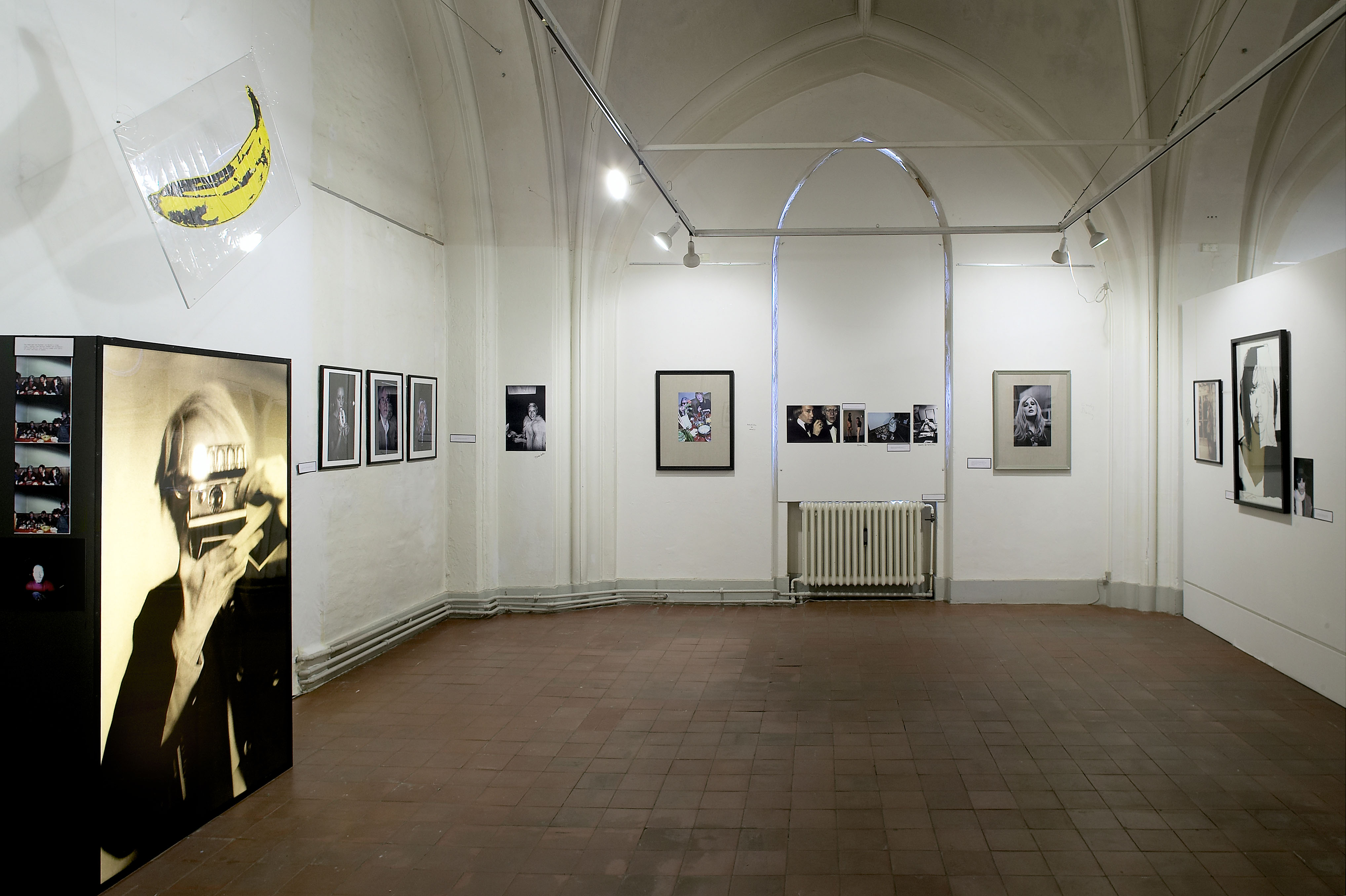 The Warhol and Billy Name Room - to the right a Mich Jagger print by Warhol, to the left the Warhol Portrait by Anton Perich, above it the Banana Cross
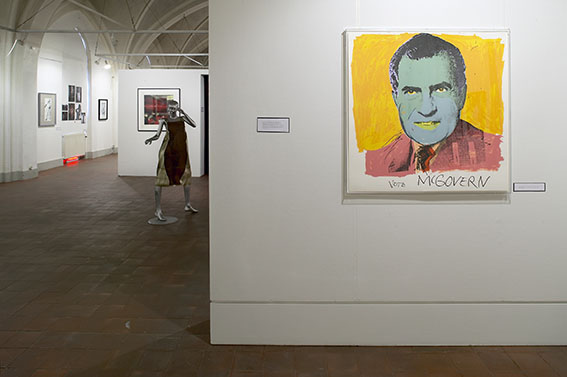 Vote McGovern by Andy Warhol
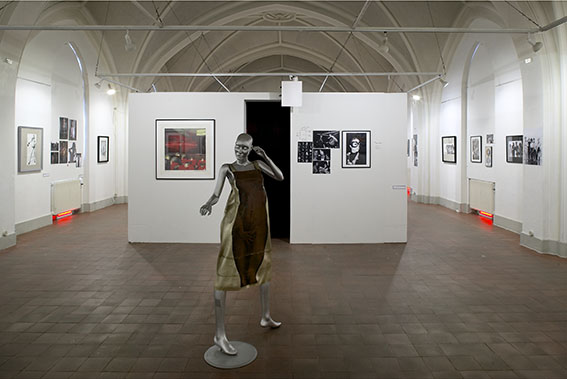 The Tiger Morse dress on Silver Model with the re-created Backroom in the back
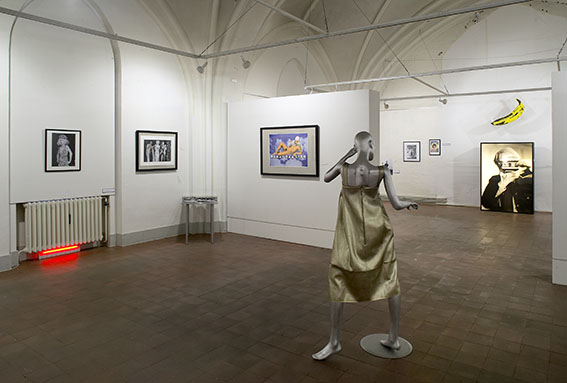 View of the Warhol Lightbox by Anton Perich and the Banana as the New Cross
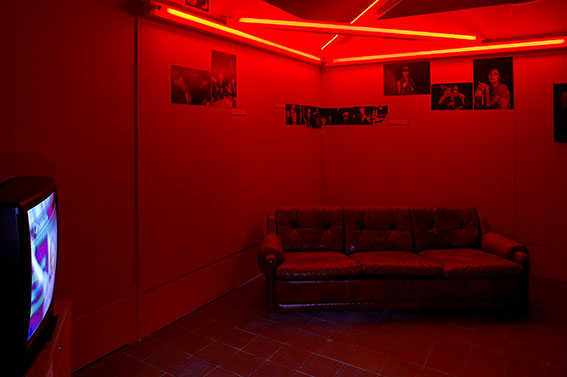 The re-created Backroom with original Dan Flavin Triangle Red Neon Sculpture. One could sit in the room and see films by Anton Perich
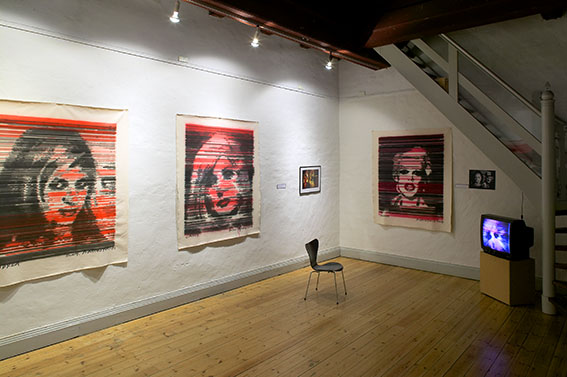 Anton Perich's Machine Paintings of Andrea Whips Feldman, Candy Darling and Cyrinda Foxe Tyler. Screen for seeing how the Machine Paints.
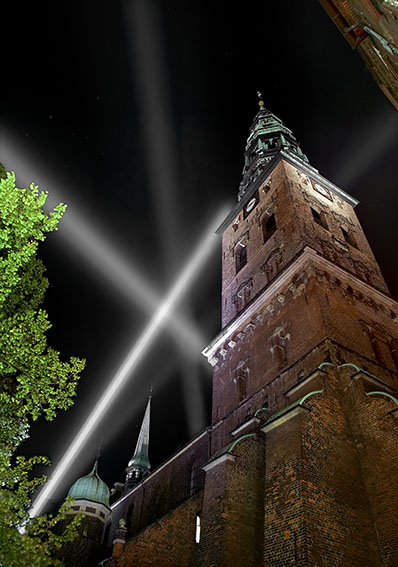
The Search Light Sculpture installation of Nikolaj Kunsthal by
Forrest "Frosty" Myers for Cultural Night of Copenhagen 2004